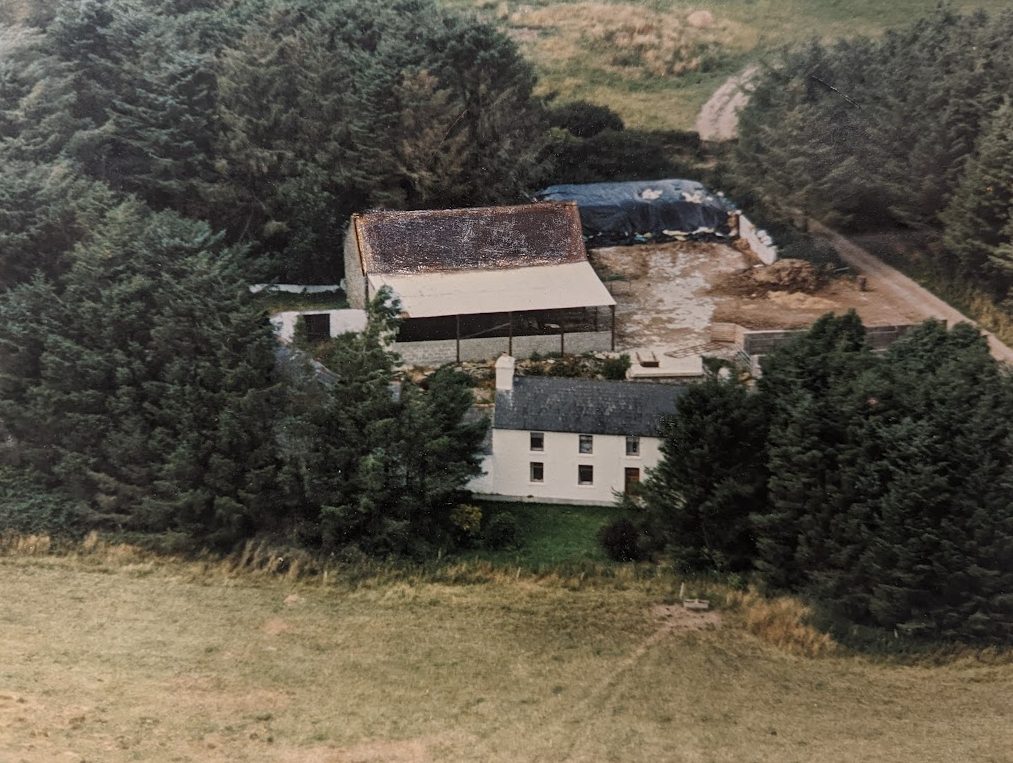
Growing up as I did in this house in the 1960s and 70s, I was never in any doubt as to who owned the land. Fitzgeralds, Collins’, Sheilys, O’Regans, O’Mahoneys, and Whooleys were our neighbours, their land bounded ours. It seemed to me that this sense of ownership was a timeless thing. And yet for the majority of history the people who worked the land didn’t own it, there were always landlords, and not just in the times since the 17th century but back before that time to where the land was owned by the Gaelic chieftains of the area.
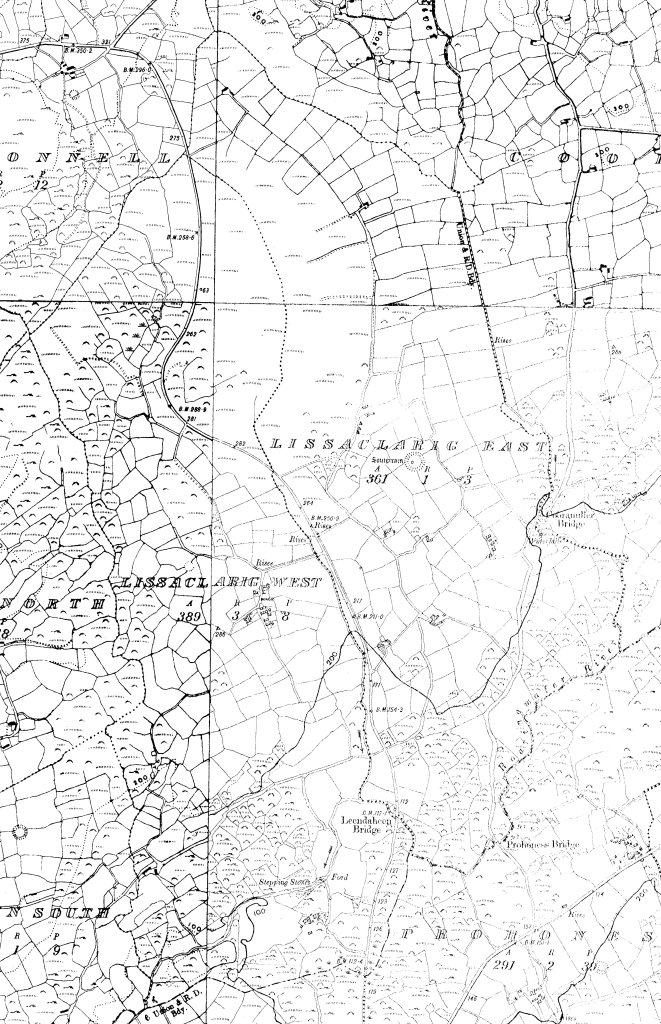
So, what’s the earliest we can go? Our townland is called Lissaclarig, it is one of eight townlands in the ancient parish of Kilcoe. The O’Driscolls, the lords of Baltimore, owned the land of Kilcoe alongside the McCarthys. We have a good idea of their story from the 1500s onwards and can make a fairly clear link between them and our townland.
The last of the O’Driscoll lords in the area was Sir Fineen O’Driscoll. Fineen had given his fealty to Queen Elizabeth I and was granted the title Sir Fineen in return. He was a politically savvy individual and kept on the winning side of many political conflicts of the time, including the Desmond rebellion (1579-1583). After the battle of Kinsale in 1601 however, he found himself on the losing side, having supported the Spaniards when they landed at Kinsale and Castlehaven. He still managed to negotiate a deal and managed to hold onto his lands. However, he was financially stretched and mortgaged his estates which finally ended up in the hands of Sir Walter Coppinger.
Sir Walter’s son Dominic is recorded as the owner of the townland in the 1640s. The fortunes of the Coppingers ebbed and flowed during the 1600s. After the 1641 rebellion and the arrival of the Cromwellians in 1649, they were in a difficult position, given their royalist affiliations. They still managed to hold onto their land through passing it on to another branch of the family who were more politically aligned to the powers that be. However, the family lost the ownership of Lissaclarig after backing the wrong side in the Williamite wars (1689-1691). As a result, the new owners of the land became the Beecher family based in Aughadown House a few miles to the south. The Beechers were on the winning side of that conflict, Colonel Thomas Beecher of Aughadown was aide-de-camp to King William at the Battle of the Boyne.
The Beechers held the land for well over a century during which time the population of the townland greatly increased. It was during this time that many of the fields that are in place today were laid out – a period that saw the growth of the potato as a staple crop. This era also saw a move from pasture to tillage which meant that there were smaller units more intensively farmed that they had been previously.
The Beechers sublet their estate to middlemen and the intermediate owner of Lissaclarig in the 1830s was Samuel Levis. The ancestors of many of the families who still live in the townland today paid their rents to Samuel Levis on the two galedays (rent payment days) of the 25th of March and the 29th of September.
In the early 1850s, the Beecher brothers fell into financial difficulties and their land was sold through the Encumbered Estates court. As a result, the land came into the ownership of Samuel Jagoe, the last landlord in Lissaclarig.
From the 1880s onwards, a series of land acts made it possible for sitting tenants to buy their farms. In the case of our farm, that didn’t happen until 1923.
 The Front Field